Foundation
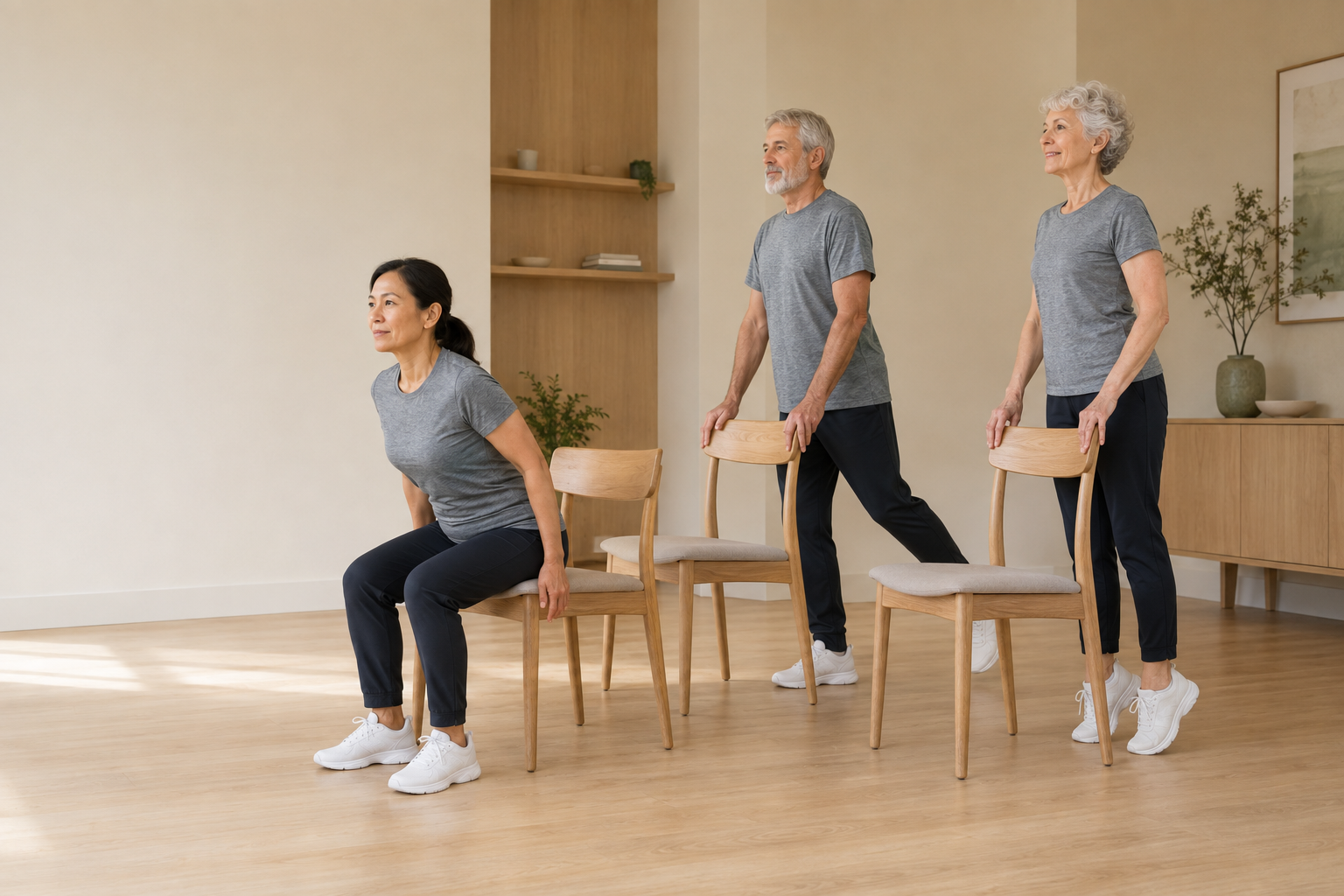
Additional support, simpler variations and a comfortable place to rebuild consistency.
ARVENTO RIDE BETTER · 03
Balance. Mobility. Independence.
Move well. Stay strong. Live independently.
Why Strength for Life?
Strength is not only about athletic performance. Lower-body strength, balance, mobility and movement confidence support many physical tasks we rely on every day.
This resource connects simple movement practice with standing up, using stairs, carrying groceries and walking confidently. Start where you are and use support when needed.
LearnUnderstandApply
Four principles
Begin with real life
Start where you are
A 45-year-old may begin with Foundation. A 70-year-old may choose Build or Progress. Select the version that lets you move with control today.
Additional support, simpler variations and a comfortable place to rebuild consistency.
Standard movements for regular practice when the basics feel comfortable.
A thoughtful increase in repetitions, duration, resistance or control—never automatic.
My Strength for Life
Your routine uses simple, transparent rules—not medical profiling.
Today’s Routine
Small, consistent practice matters. How did that feel?
You may be ready to try the next option.
Movement library
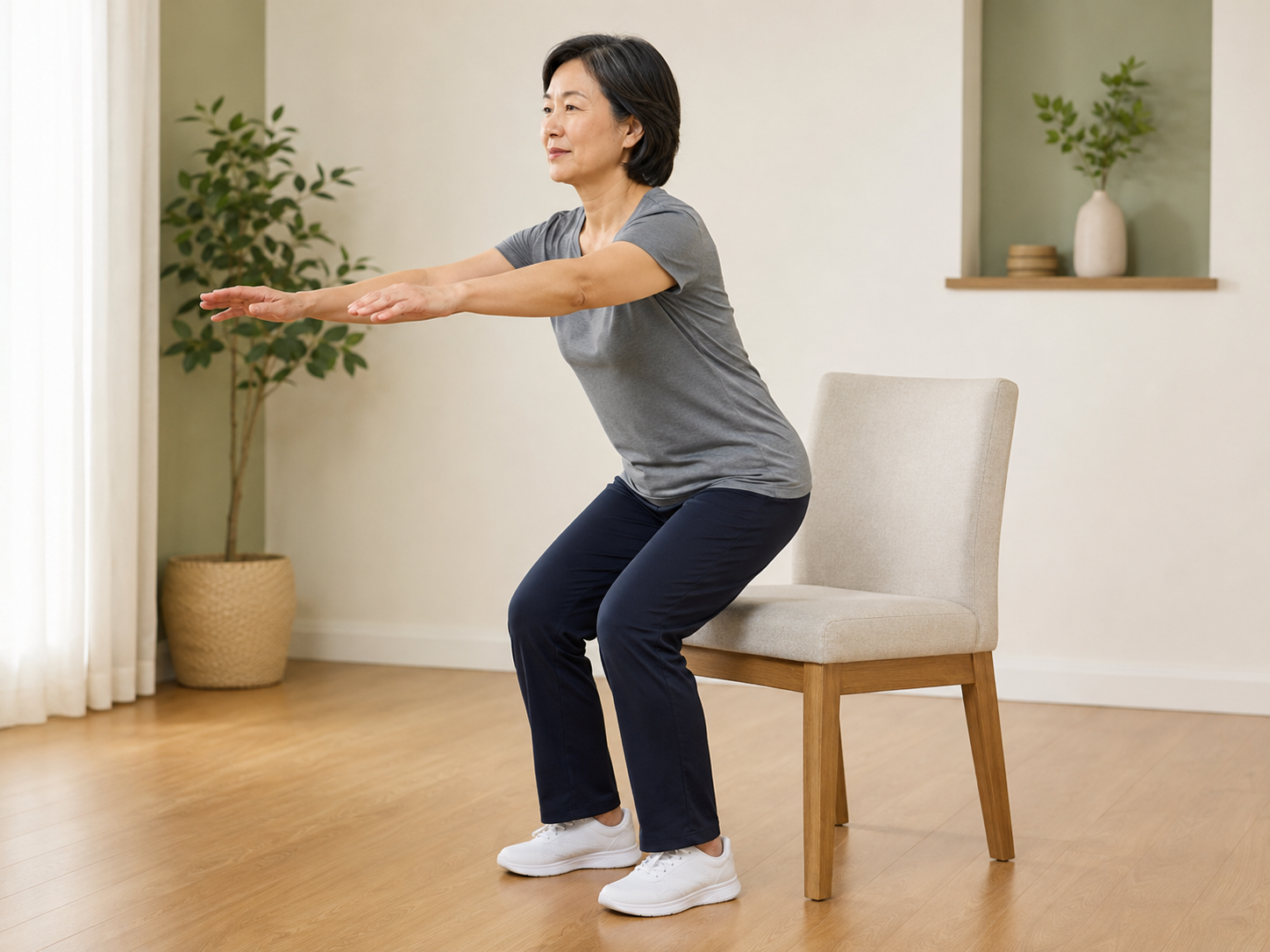
This movement connects directly to getting out of a chair and develops controlled lower-body effort.
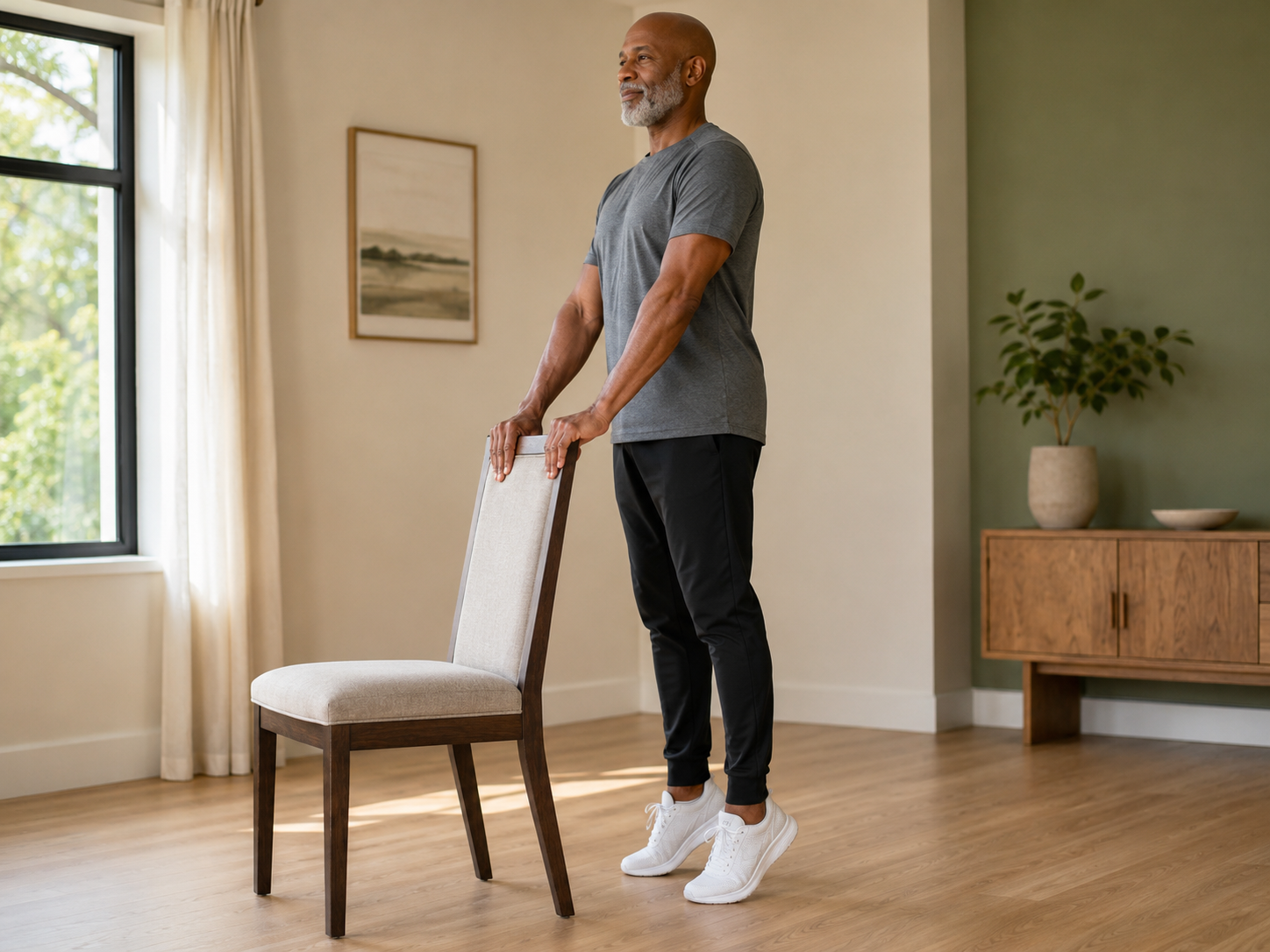
Calf strength contributes to standing control, walking and everyday lower-leg function.
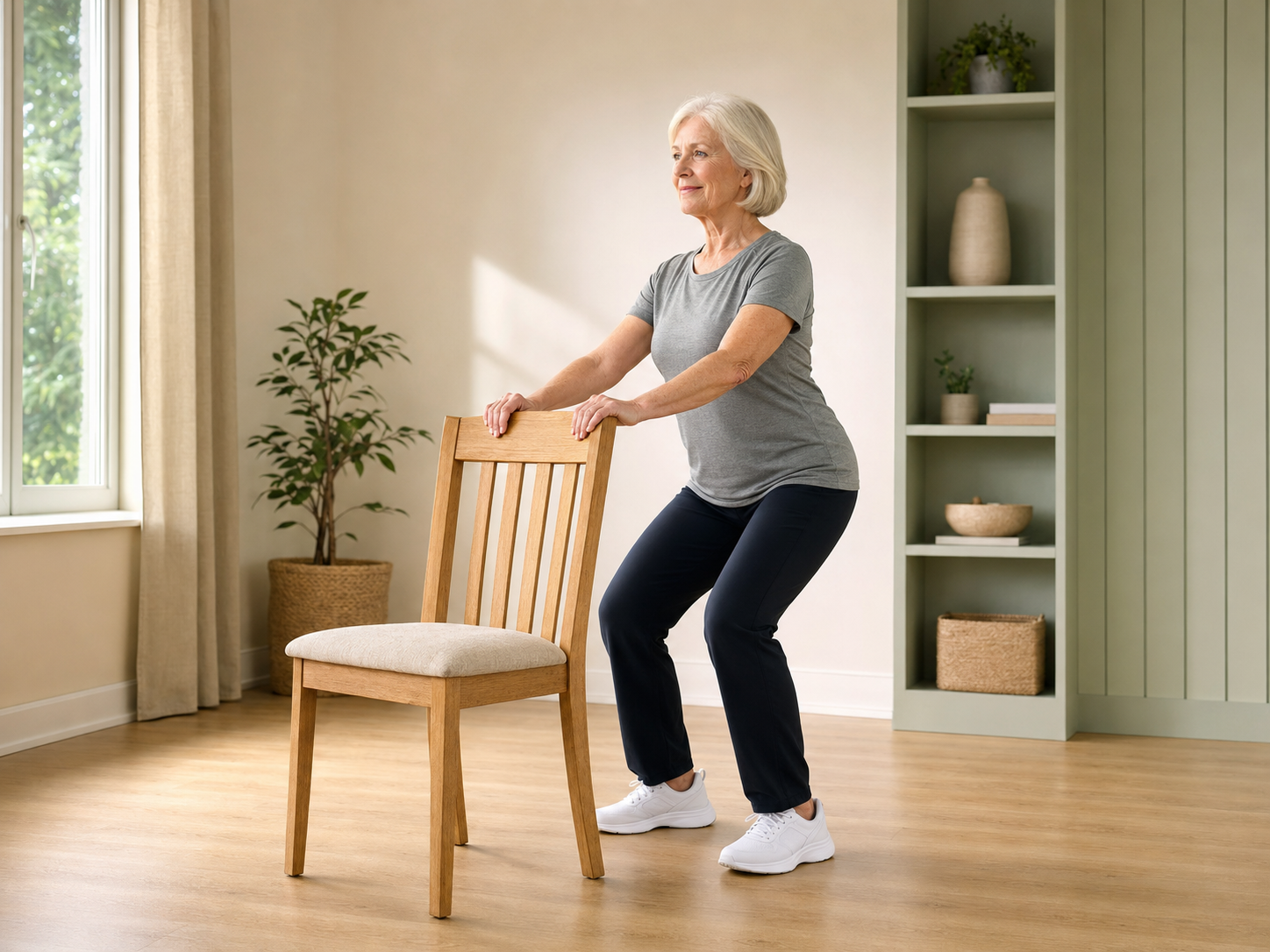
Controlled lowering and rising supports sitting, lifting and using stairs.
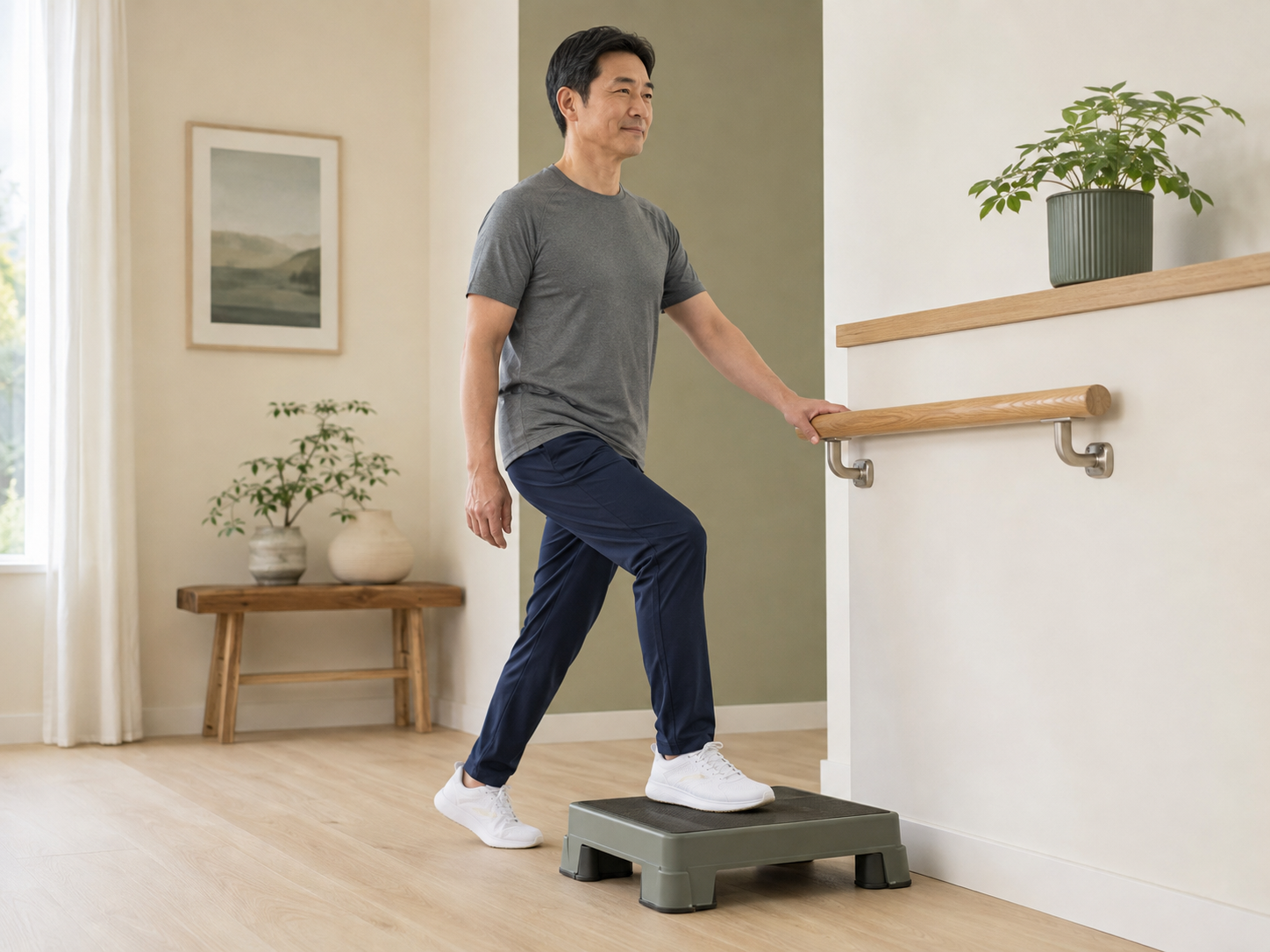
Step-ups practise the strength, balance and control used during stairs and elevation changes.
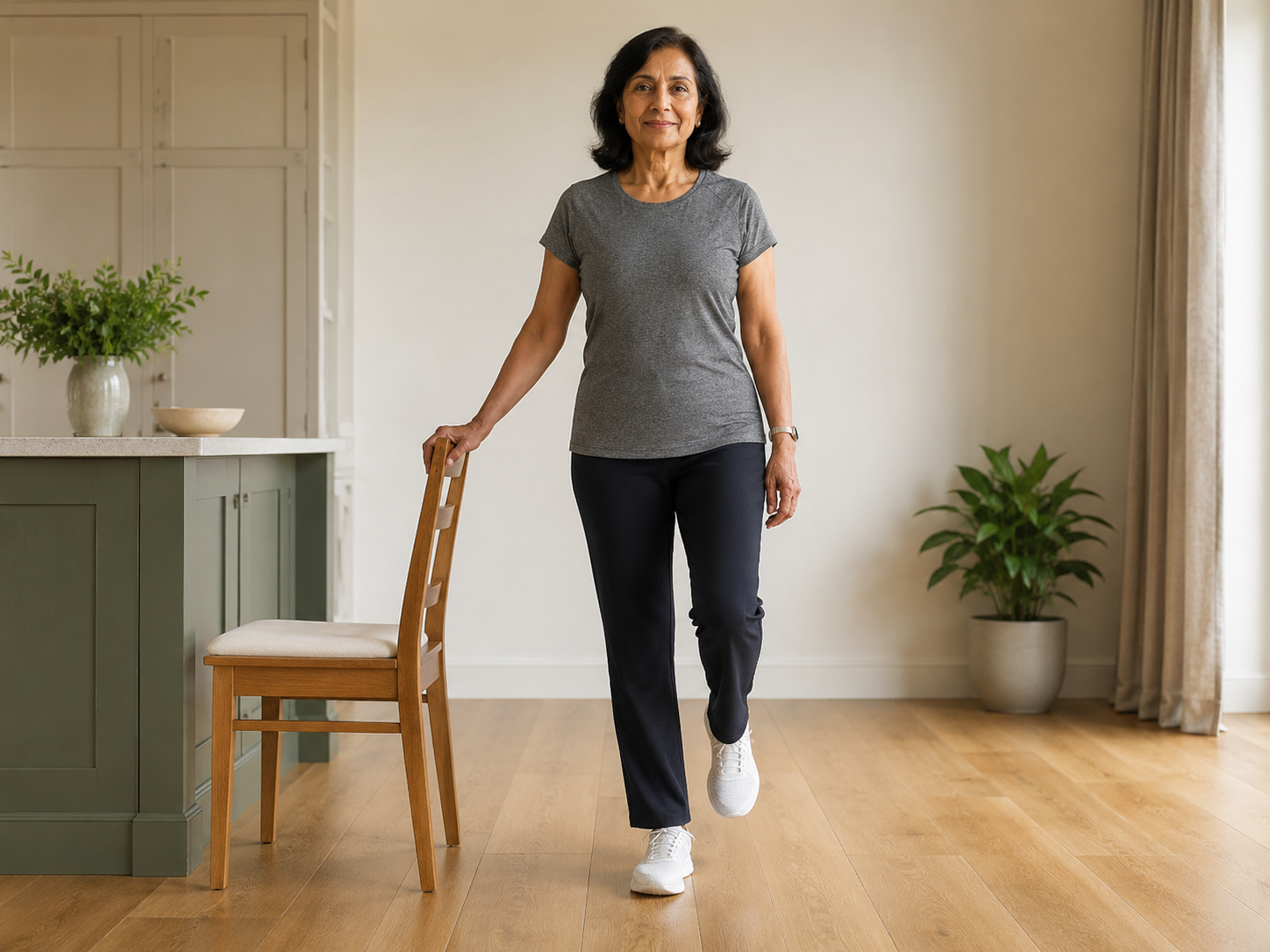
Single-leg support is part of every walking step and can build steadiness and movement confidence.
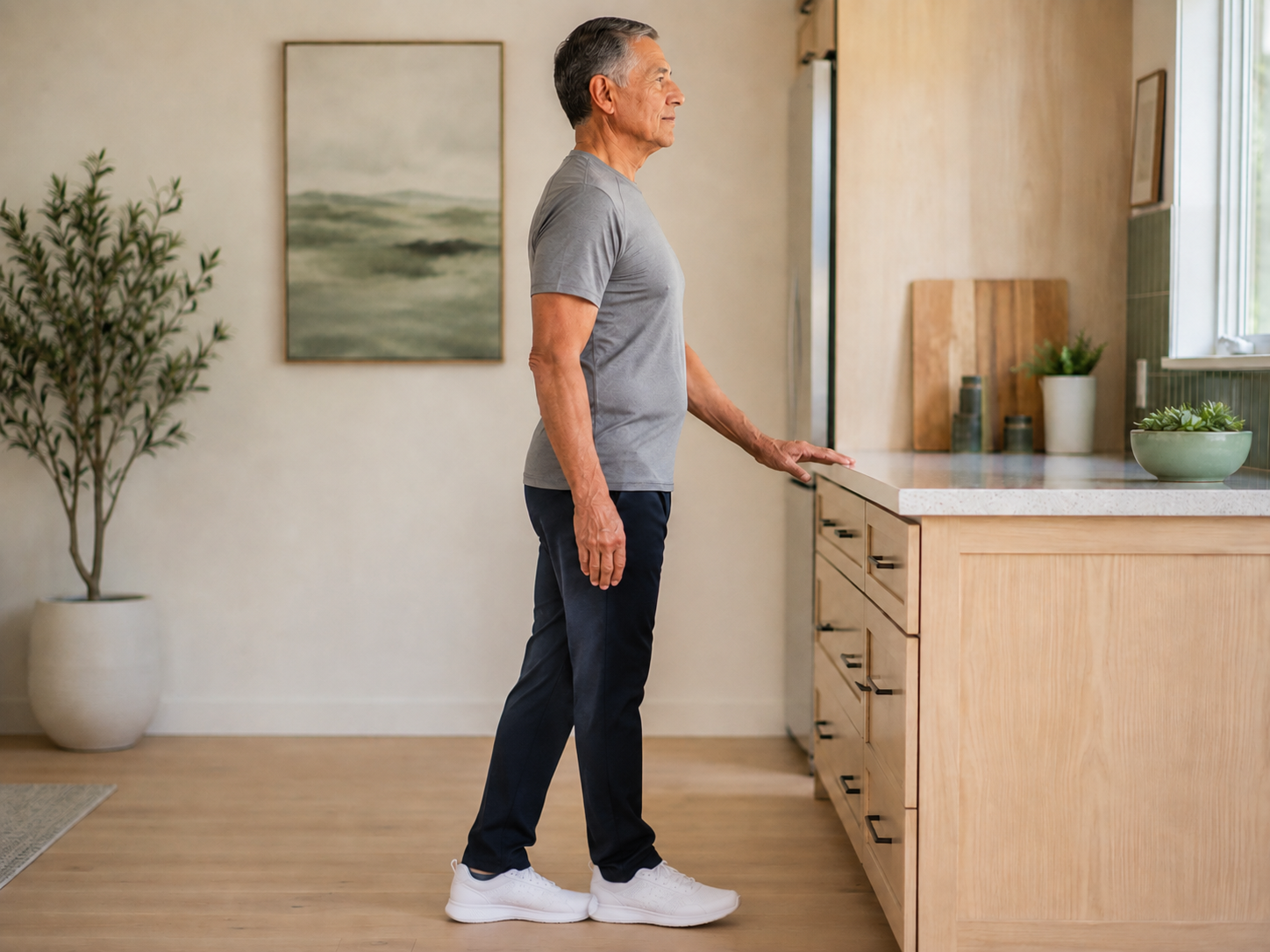
A narrower stance challenges standing control in a safe, adjustable way.
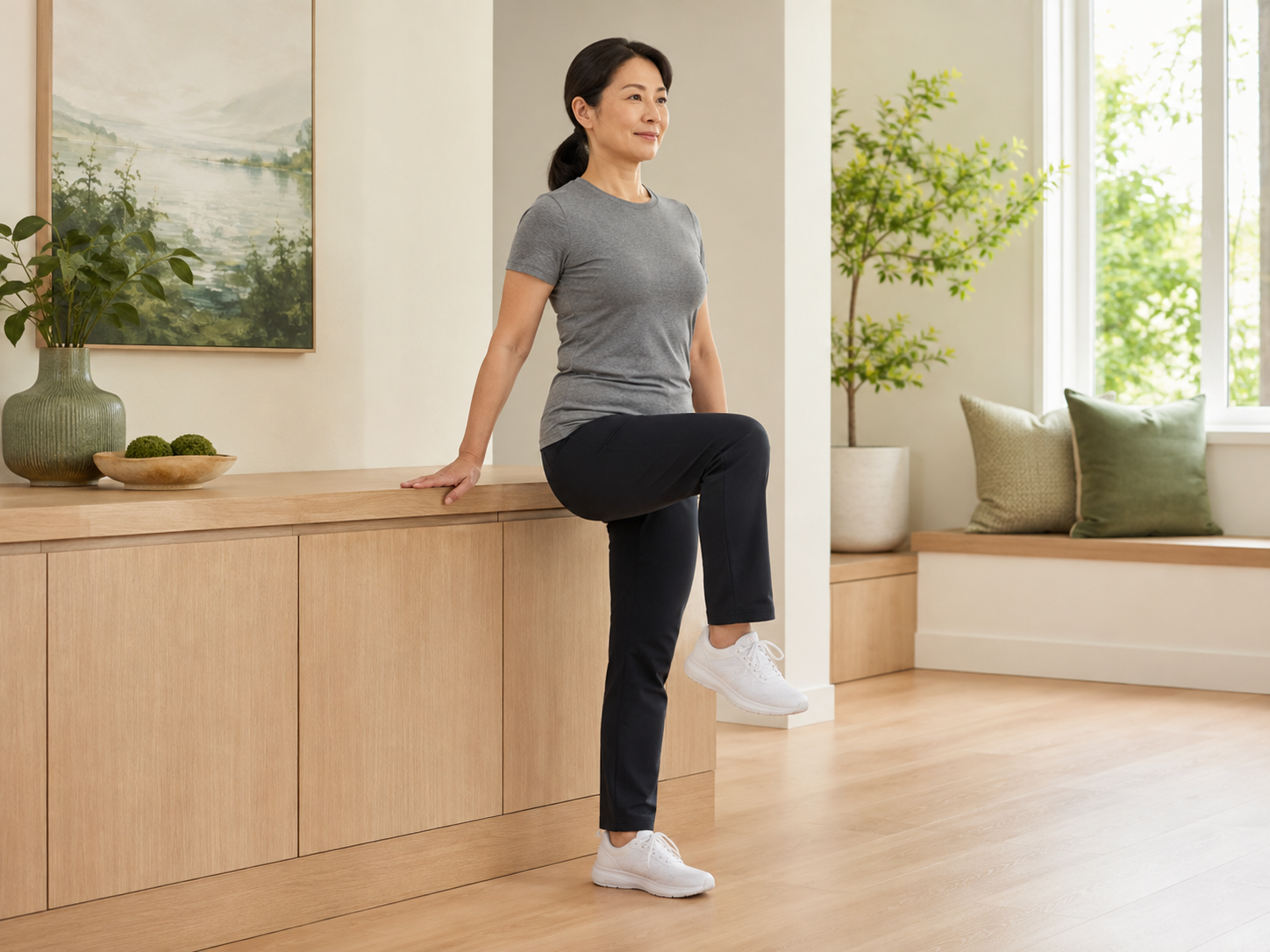
Marching practises weight transfer, hip control and the repeated single-leg moments used in walking.
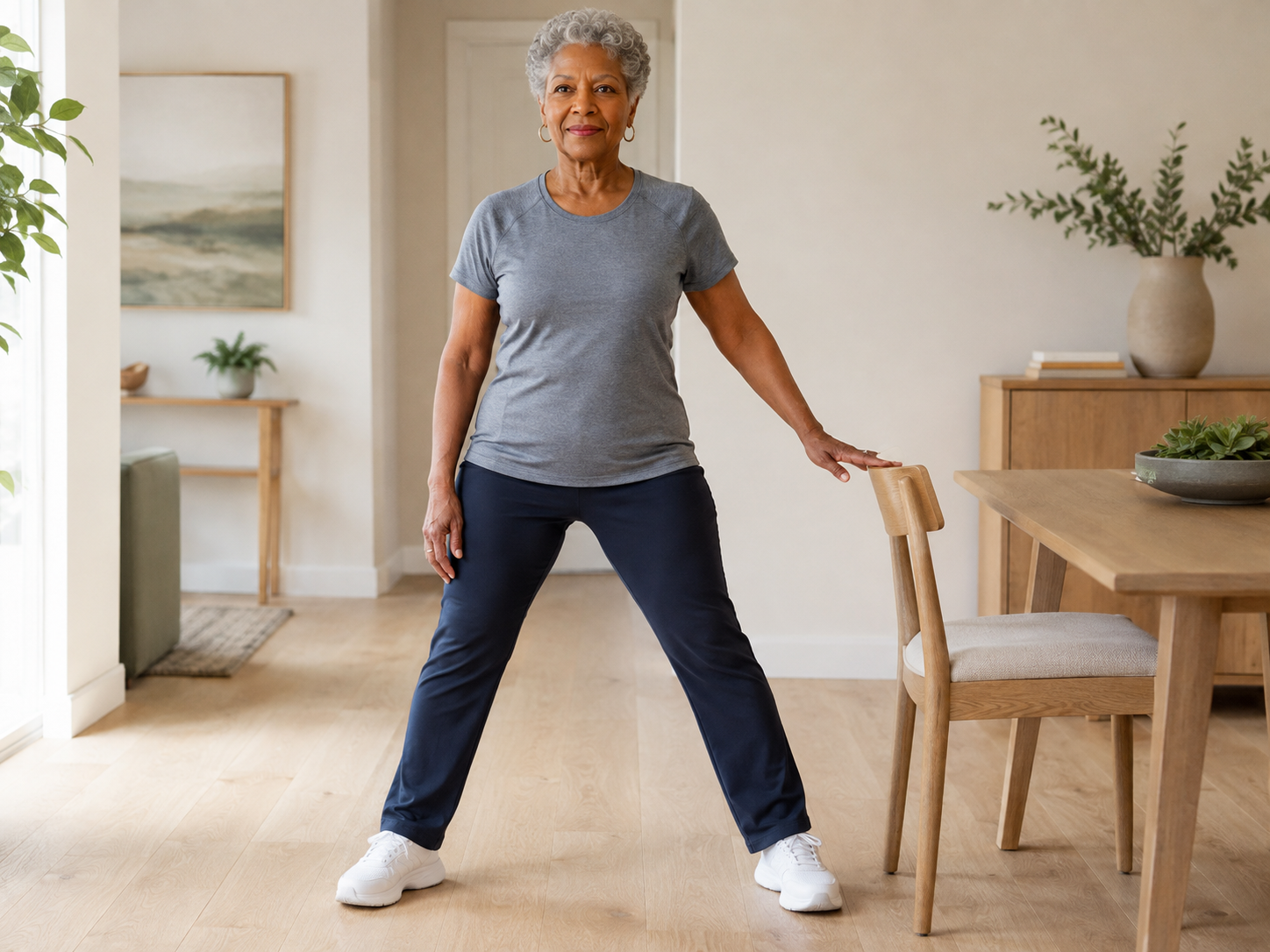
Controlled weight transfer supports turning, reaching, stepping and changing direction.
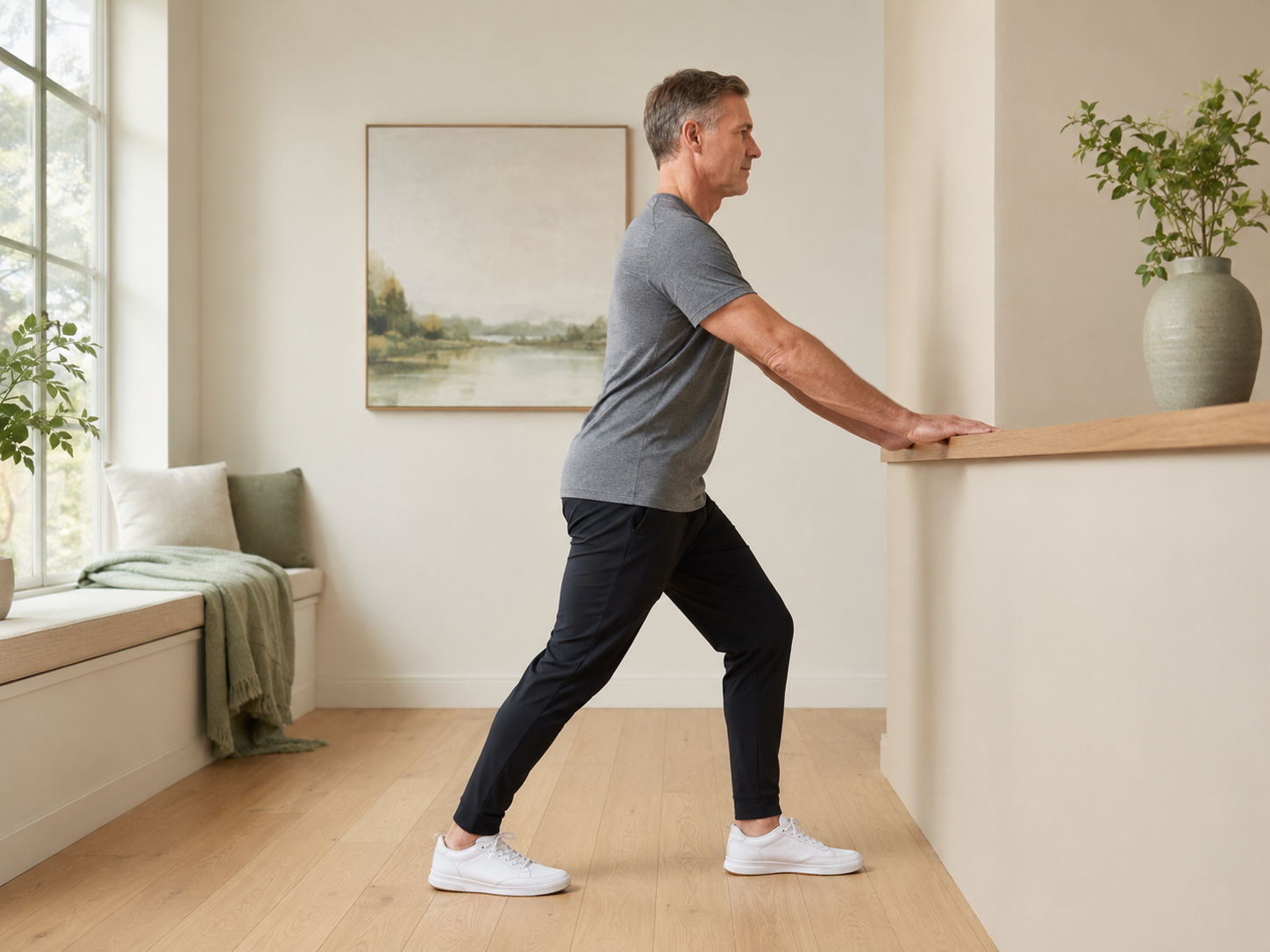
Usable ankle motion helps the body move over the foot during walking, stairs and controlled lowering.
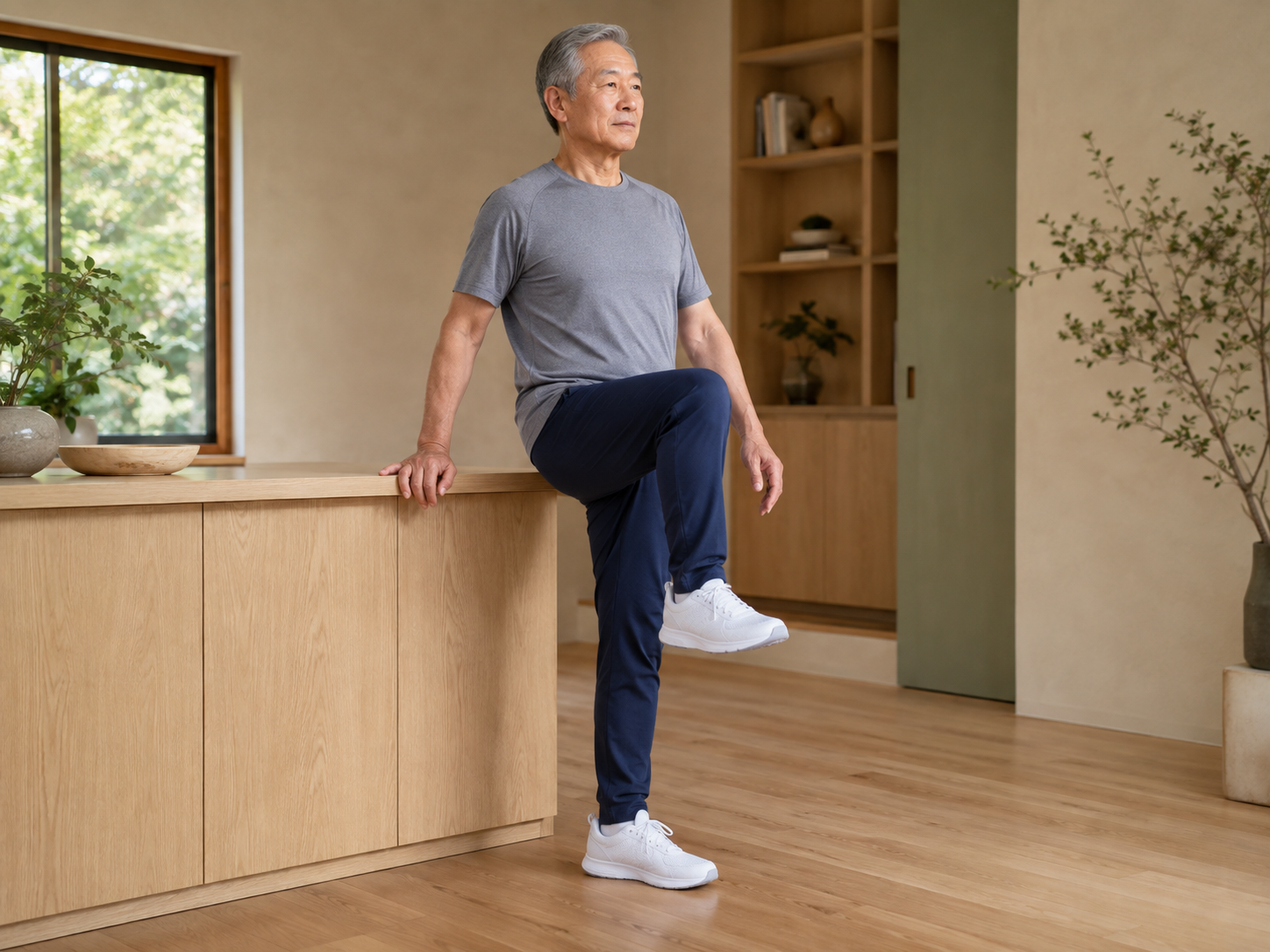
Comfortable hip movement contributes to stepping, chair rise, dressing and stair climbing.
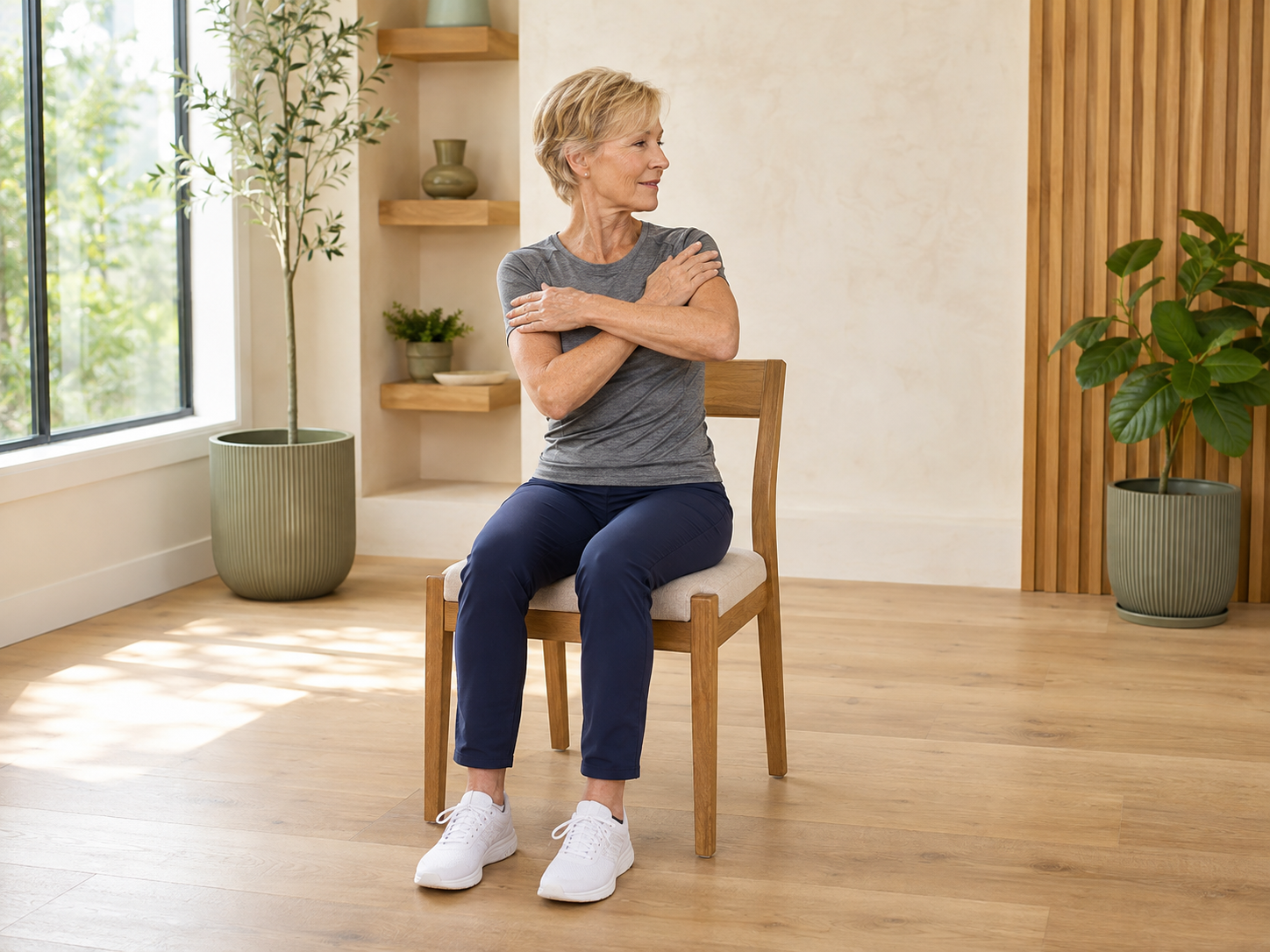
Upper-body rotation supports looking around, reaching, turning and coordinated everyday movement.
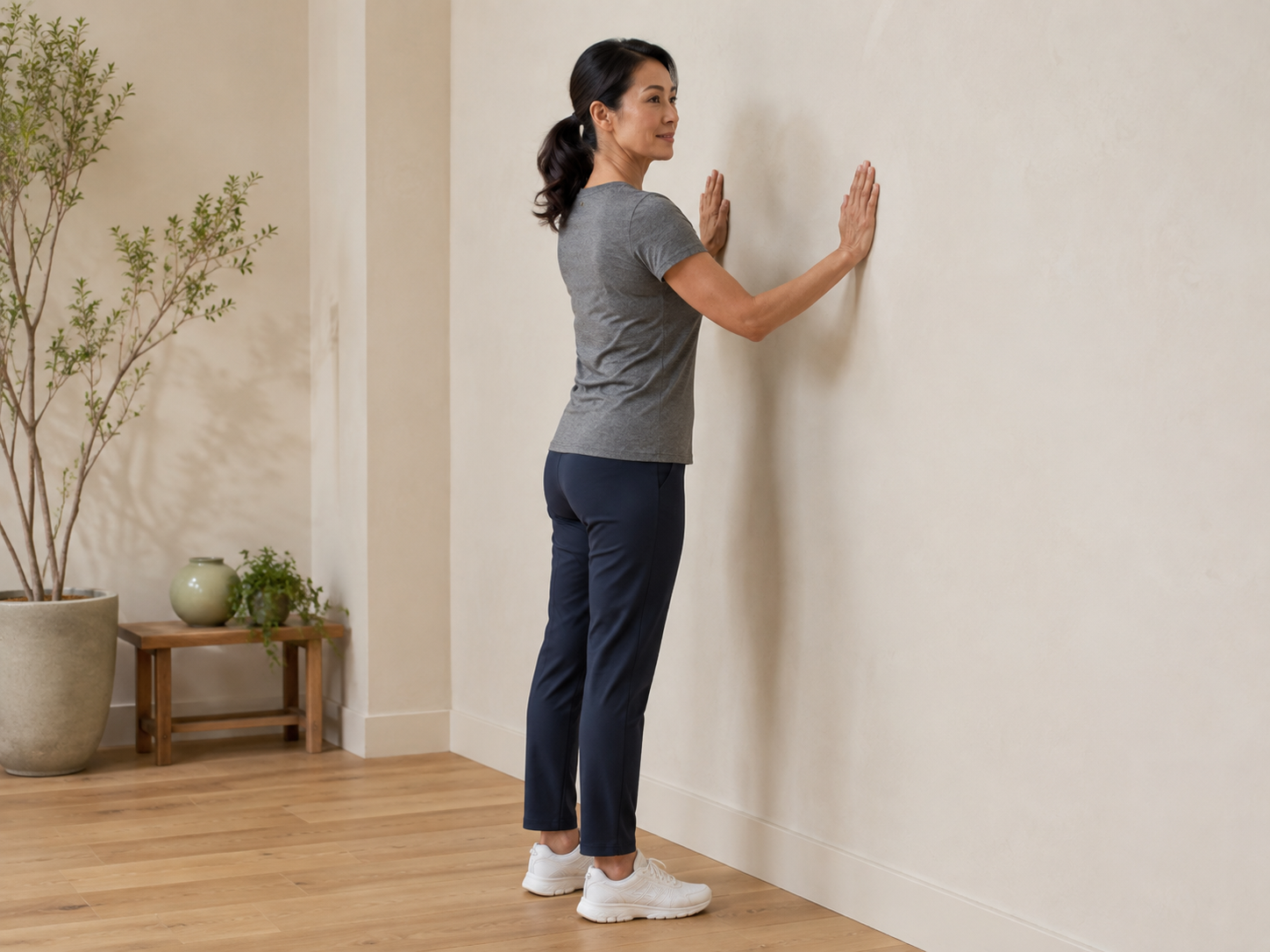
Comfortable shoulder motion helps with dressing, reaching shelves and carrying everyday objects.

Carrying practises grip, posture, trunk control and steady walking for everyday errands.
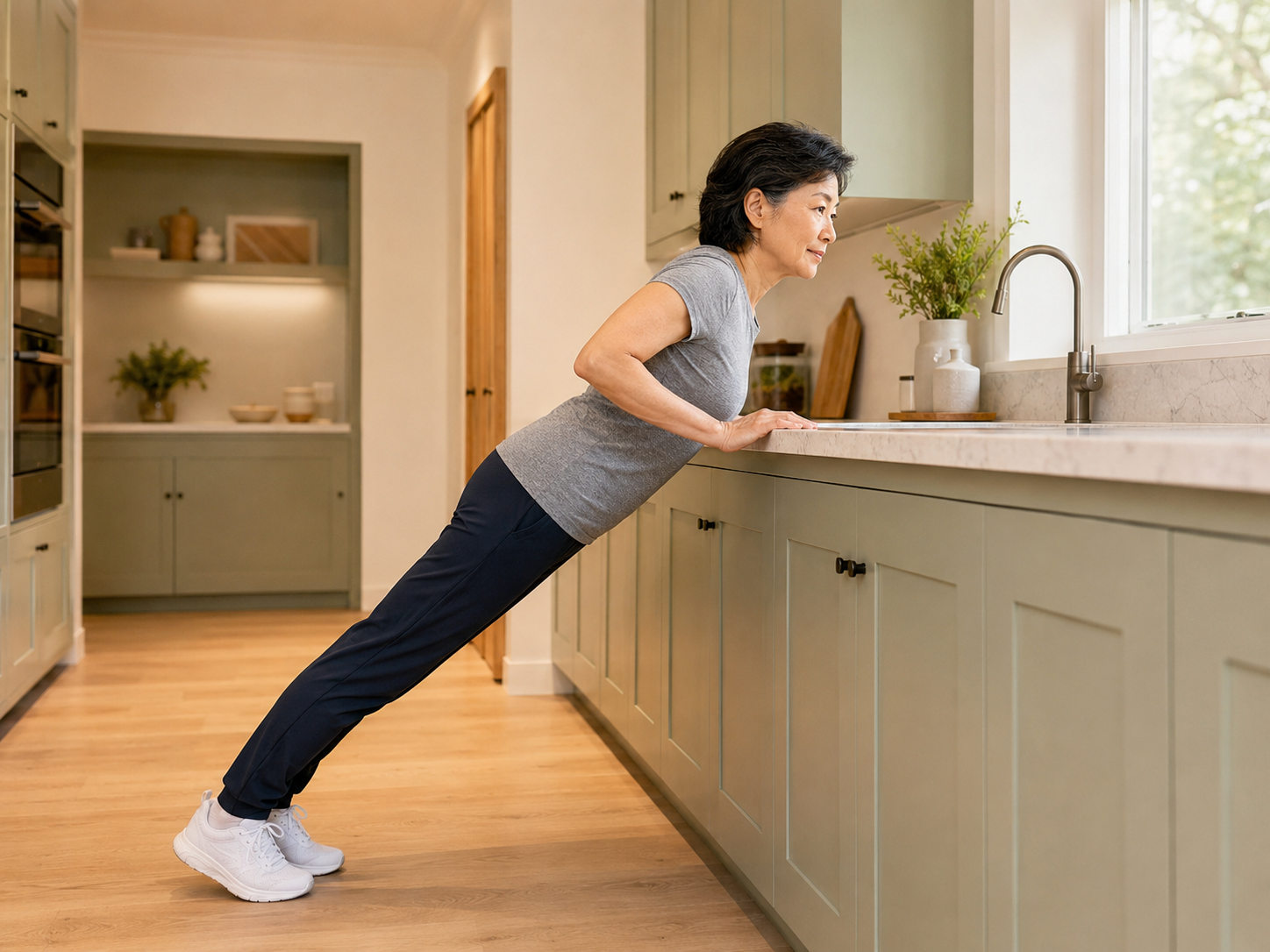
Pushing strength supports opening heavy doors, moving objects and using arm assistance when needed.
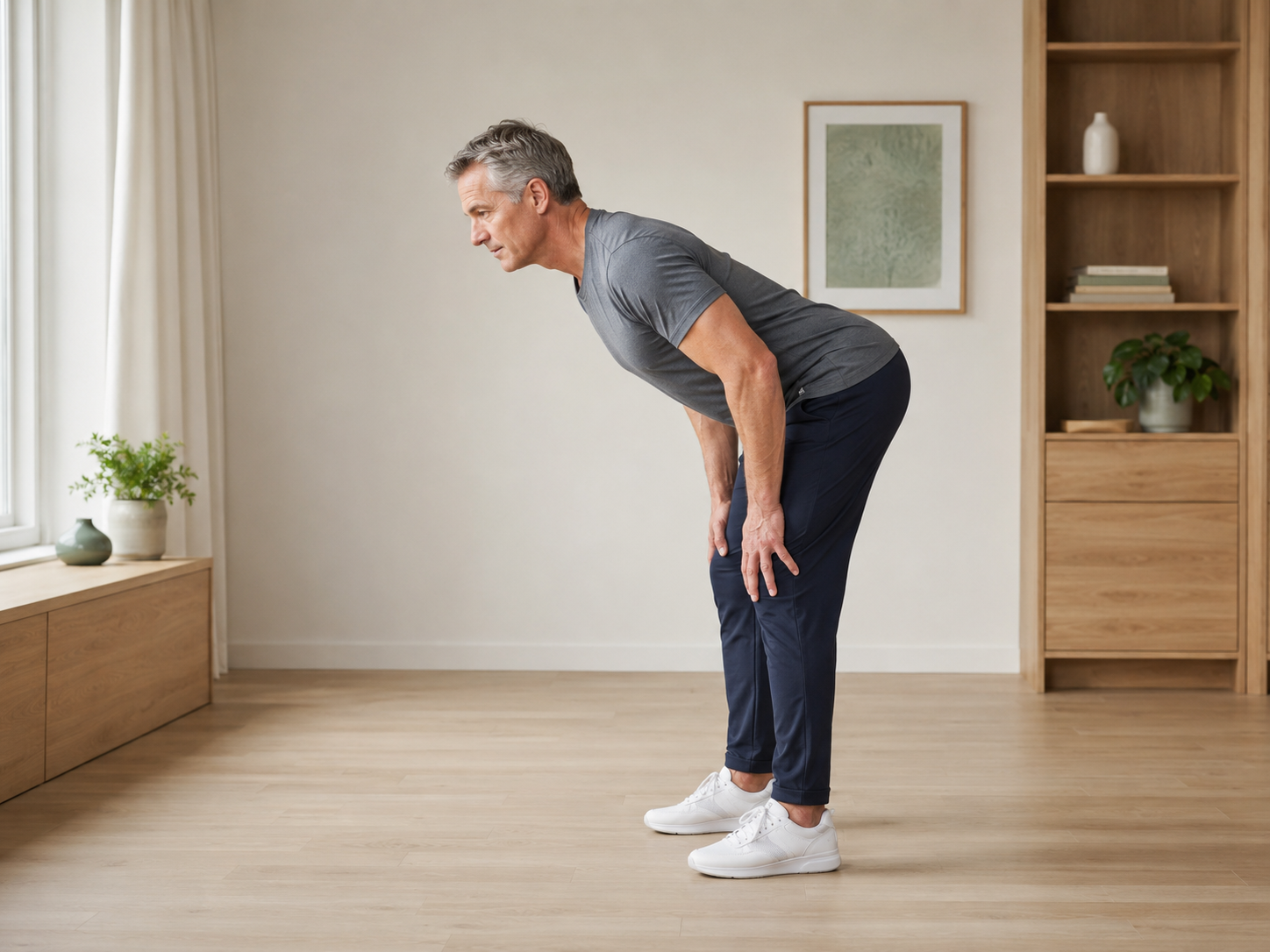
A controlled hip hinge helps organise the body for reaching toward lower objects and beginning a lift.
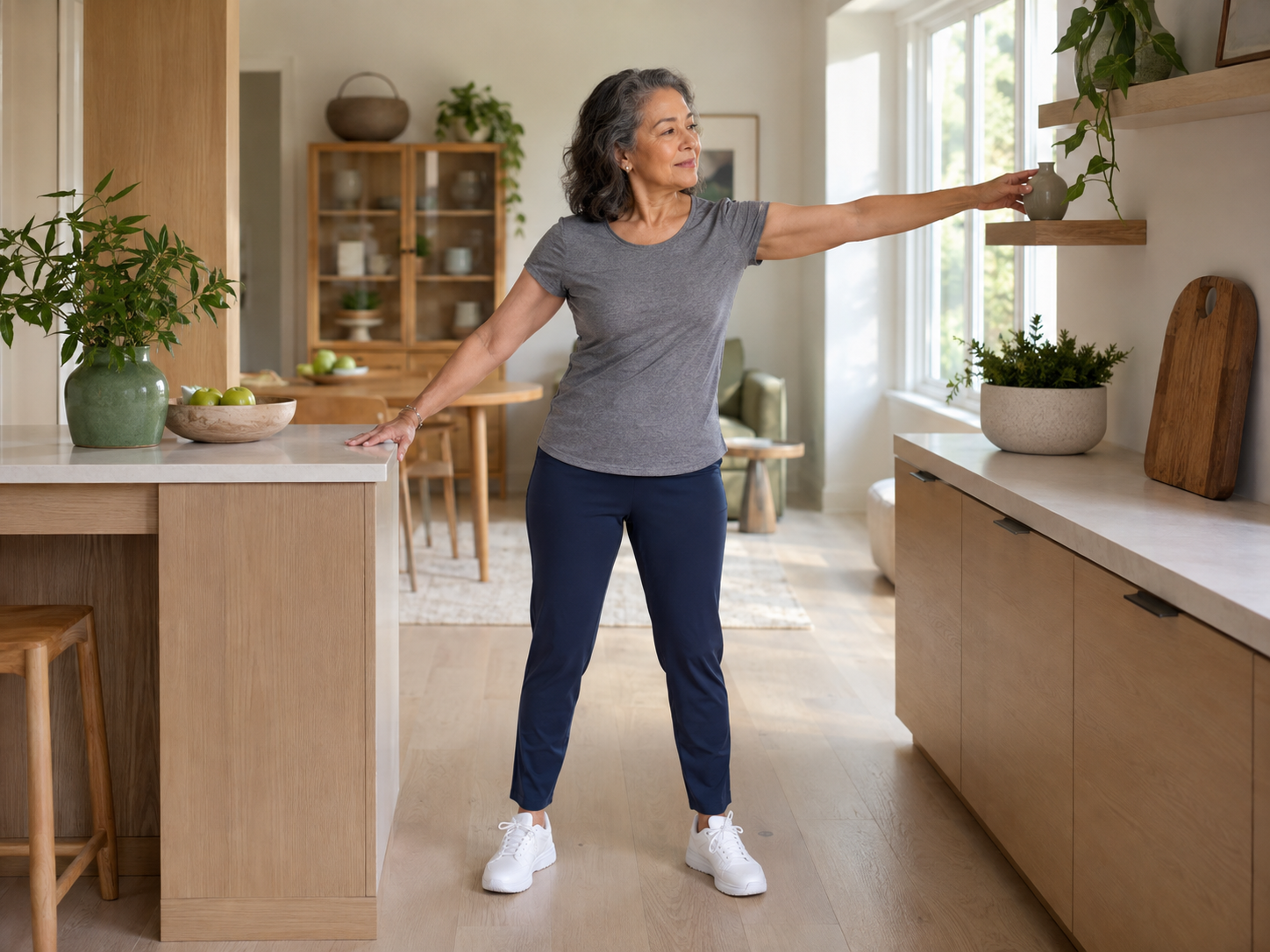
Reaching and turning together appear in cooking, dressing and putting items away.
Practice tools
Use support if needed. The timer moves from left to right and can be paused at any time.
Create a reminder request for ChatGPT. No calendar file is required.
Habit awareness—not competition.
0 active days this week
Trusted guidance
ARVENTO reviews primary guidelines, public-health sources and established exercise organizations. Every record keeps its source, review date and editorial status.
Strength for Life provides general educational fitness information. It is not medical advice or an individualized exercise prescription. Choose movements appropriate for your current ability. If you have an injury, medical condition, recent surgery, concerning symptoms, or uncertainty about whether an activity is appropriate, consult an appropriate qualified professional.
Stop if a movement causes pain, dizziness, unusual shortness of breath, or makes you feel unwell.